President Home of Taekwon-Do
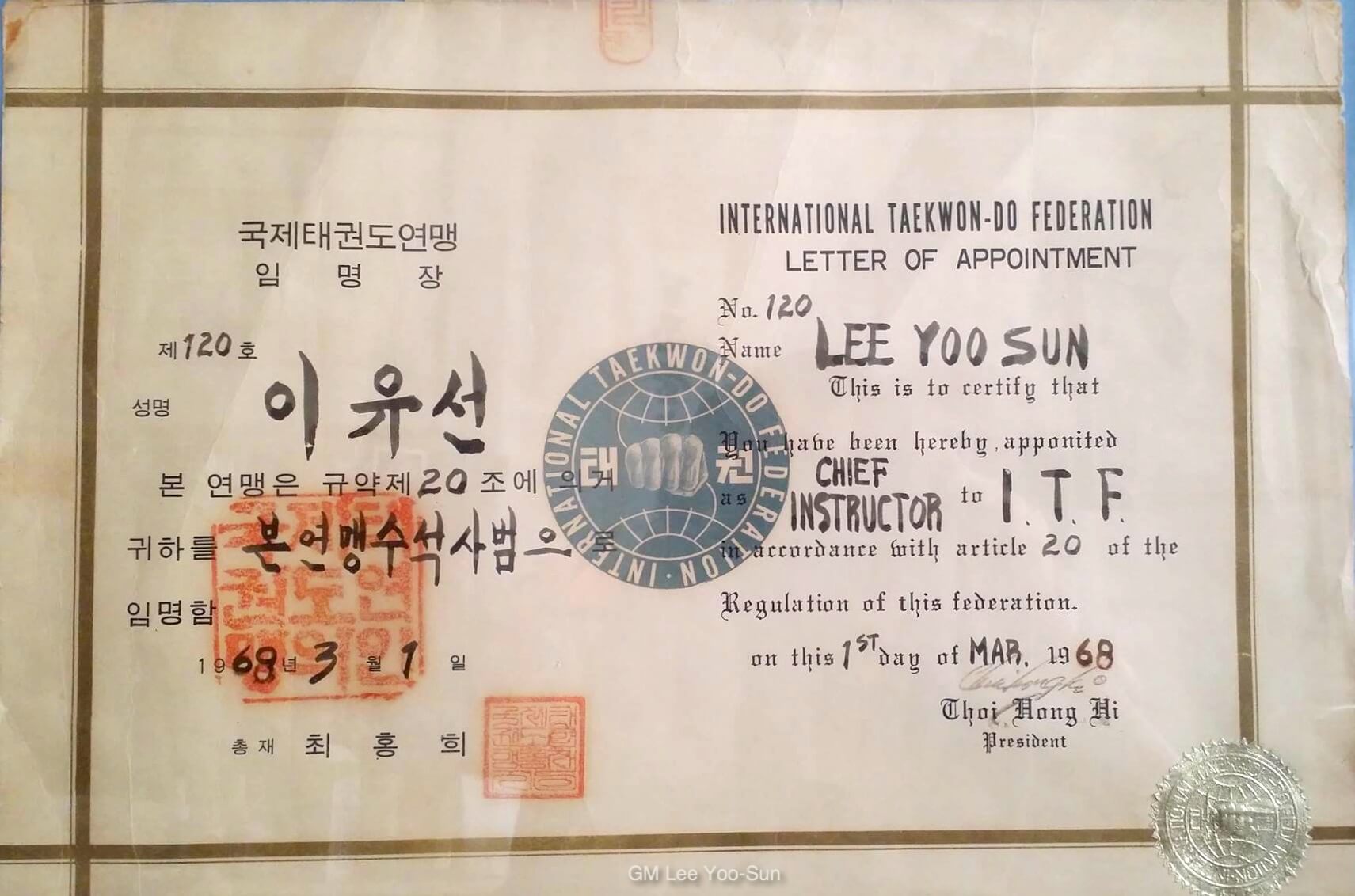
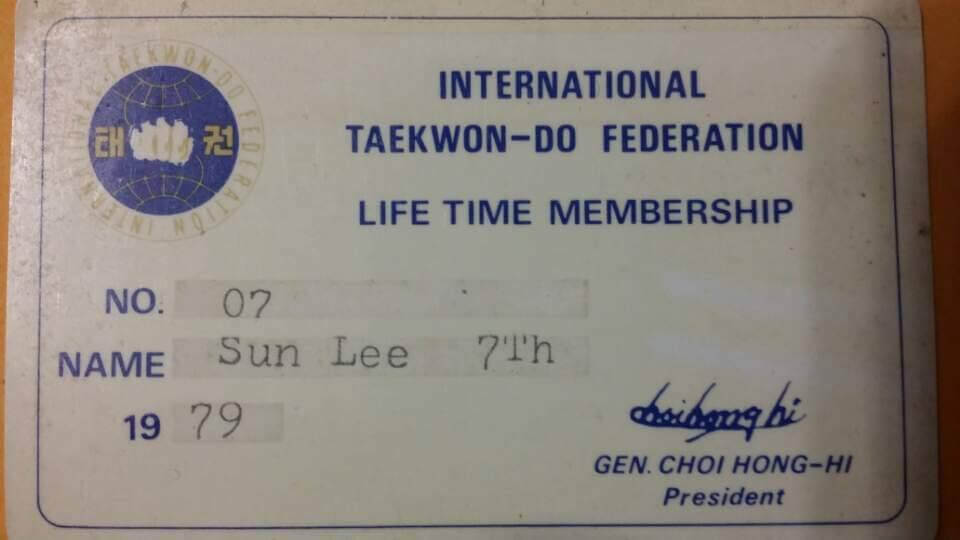
Pioneer of International Taekwon-Do, 9th degree black belt. Born on August 1, 1942. Served the ITF as Chief Instructor and Life Member since 1966.
Left: Kim Bok-man, Choi Hong-hi, Nam Tae-hi, Lee Yoo-sun
Lee Yoo Sun (pronounced "yoo-sun"), a member of
the Oh Do Kwan, is one of the pioneers who marked the golden age of ITF
Taekwon-Do.
Lee began his training at the age of 15 under the instruction
of Choi Bong Gip and Hong Ei Jung. According to an interview with Philip
Hawkins for Totally TaekwonDo magazine in 2004, Lee dedicated two hours, five
days a week after school. When there were no classes, he would travel to the
Chung Do Kwan headquarters to train with Uhm Woon Kyu, Yoon Ki Hue, and Son Duk
Song. After finishing high school, he had to drop out of university, which he
attended briefly, due to family financial problems.
One door closed to him, but another opened: the army would
allow him to use his martial arts skills, and he did so by joining the Oh Do
Kwan, then led by General Choi.
The Oh Do Kwan had begun with the Army's famous 29th
Division on Jeju Island. In 1953, General Choi had been tasked with forming
this new 29th Division (in Korean, TWO-NINE can be pronounced "I-Ku,"
which, through a play on words, refers to "the fist"). He then drew a
fist surrounded by a map of Korea and used all his power to attract martial
artists or recruits with high athletic ability. "Oh Do Kwan" meant
"school of one's own path," because it was the way for military
personnel who practiced in any dojang to feel they were in their own space,
following their own path.
Everyone had to practice. Soon, Oh Do Kwan spread like
wildfire throughout the various Army divisions. Lee was tasked with
disseminating Oh Do Kwan Taekwon-Do as an instructor at the 26th Division in
Yangju, Gyonggi Do. There, he first saw Hwa Rang, Ul Ji, and Chung Mu, the new
Tul forms that were replacing the Karate forms. For this reason, Jeju Island is
considered the motherland where Taekwon-Do was formed, even before it received
its name. Today, a monument can be found on the island with a raised fist
silhouetted against the sky, a testament to the famed 29th Division of the
Korean Army.
Lee recalls that during the time General Choi served as
ambassador to Malaysia, after retiring from the military, the forms designed
there by Choi were sent to Korea through Major Woo Jong Lim, who passed them on
to military personnel for training.
Taekwon-Do instruction in the military was extremely
rigorous, and Lee took care to maintain a high standard. Adopting the new
forms, which bore the names of Korean patriots, served to maintain the morale
and national pride of the soldiers he trained.
Taekwon-Do training in the army was extremely tough, and Lee
was responsible for maintaining high standards. The adoption of new forms,
named after Korean patriots, served to keep up the morale and national pride of
the soldiers who trained.
Shortly after General Choi returned to Korea, Lee Yoo Sun
began regularly attending General Choi's house in Seoul to train, along with
Park Jong Soo, Kim Jong Chan, and many others. Lee recalls that Choi had
remarkable physical endurance and that the training was very demanding. In the
garden there were practice poles and hanging bags. Training took place from
10:00 a.m. until noon, and Mrs. Choi prepared noodles. Forms, one-step
sparring, kicks, and all aspects of Taekwon-Do were practiced, including
sparring with only the feet, with the hands holding the belt behind the back.
General Choi gave orders and was often frustrated with what he saw. “Sometimes
he would get angry and say to me, ‘Lee, get out of here!’” Lee was promoted by
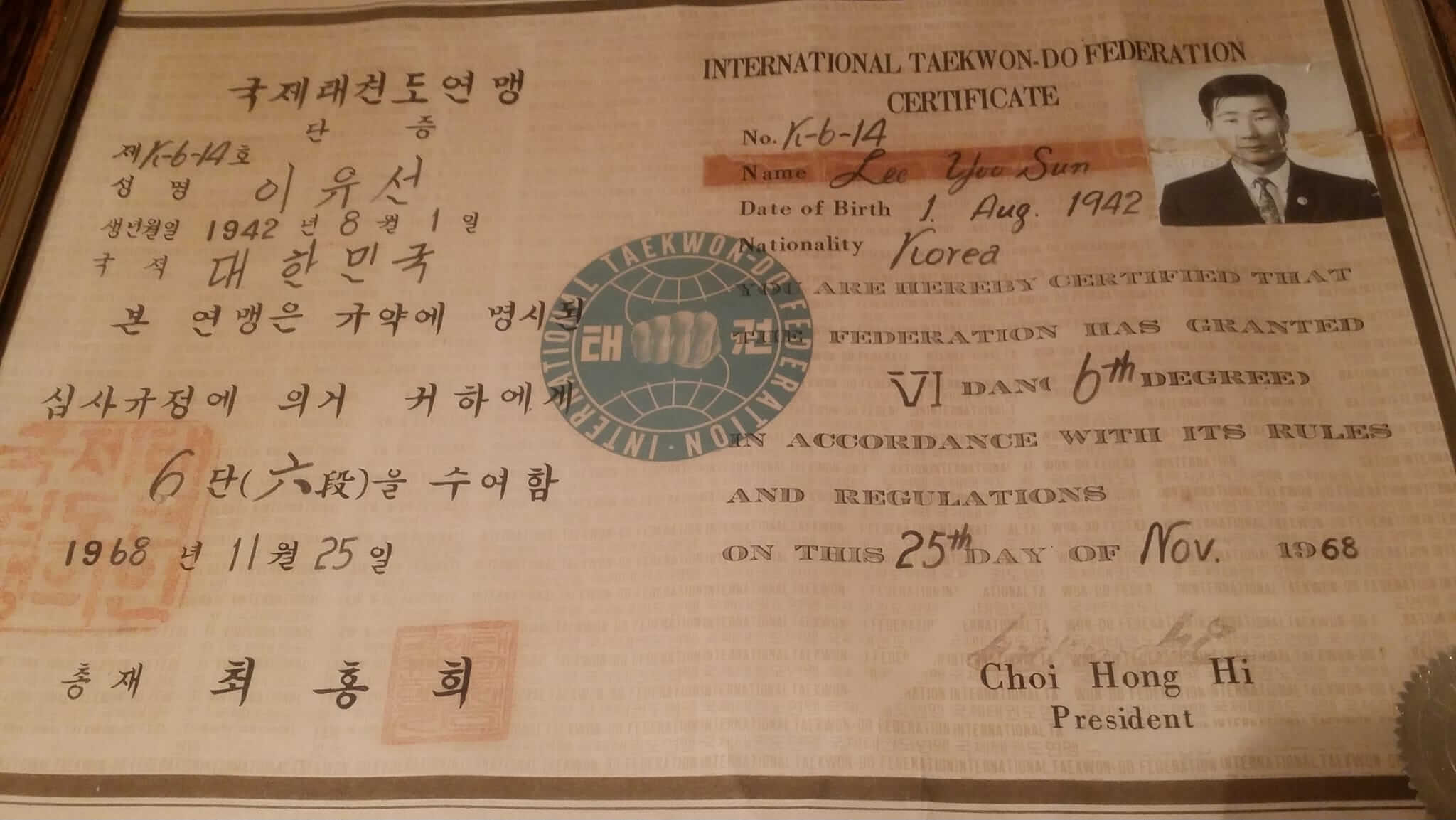
General Choi in Korea and later in the Netherlands, where he received his 6th
Dan in 1969.
For a time, Lee lived in Hong Kong, serving as assistant
instructor to Master Kim Bok Man. There, on one occasion, while training in a
park, he was challenged by someone who attacked him with a punch. He immediately
dodged it, knocking him down with a powerful spinning kick. On another
occasion, a karateka showed up at his dojang in Hong Kong, whom he dispatched
with a roundhouse kick. In Hong Kong, during 1967, Lee hosted his friend Han
Chang Kim, who was stopping over on his way to Argentina, where he was going to
introduce Taekwon-Do. In 2008, they met again in Seoul (on that occasion,
Master Adrogué was present), and in April 2025, they presided together in
Buenos Aires over the 70th Anniversary Seminar of Taekwon-Do.
That same year, 1967,
Lee moved to the Netherlands to replace Park Jong Soo, who had to travel
unexpectedly to Toronto, Canada. Despite finding himself in a country with
different customs and a language he did not know, Lee did a great job teaching,
giving exhibitions, and consolidating the Dutch Taekwon-Do Federation. Some
time later, he decided to return to Korea. General Choi asked him to join the
ITF exhibition team, which included other masters based in Europe: Rhee Ki Ha,
Park Sun Jae, Kim Kwang Il, Kwon Jae Hwa, and Lee Kyung Myung. He was then
asked to remain in France until he had to return to Korea due to his father's
poor health, who sadly passed away.
He then settled in Seoul to take care of his family, taking
part in the 1970 instructor training course that General Choi taught in Seoul,
whose photographs were used for General Choi's subsequent book. Lee was
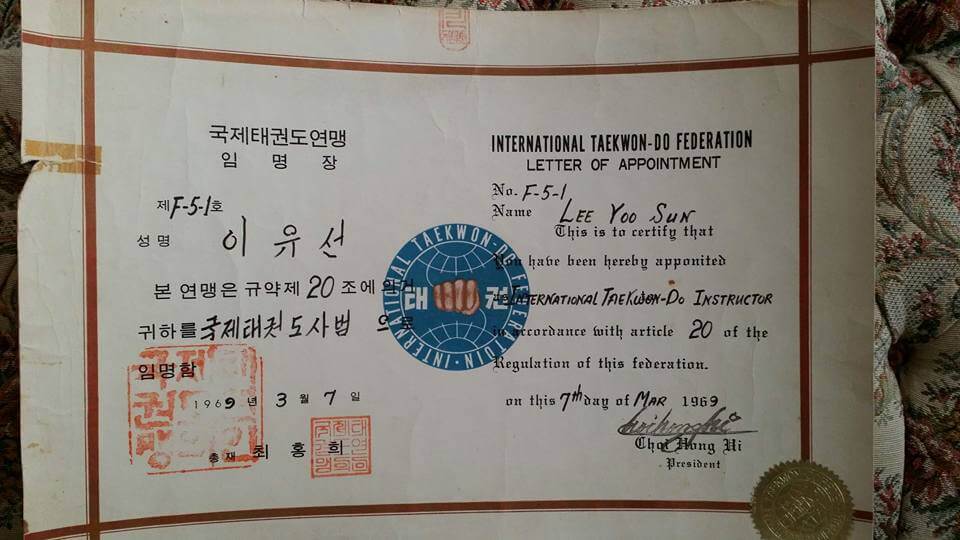
promoted to the position of Chief Instructor of the ITF.
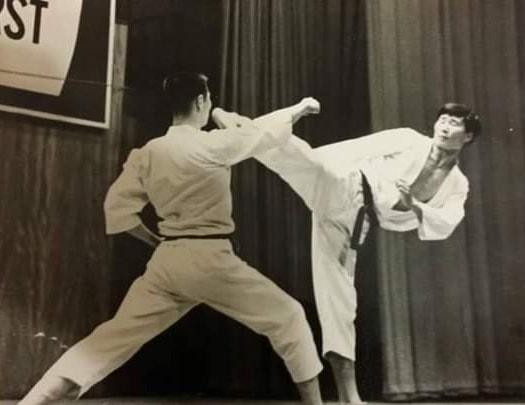
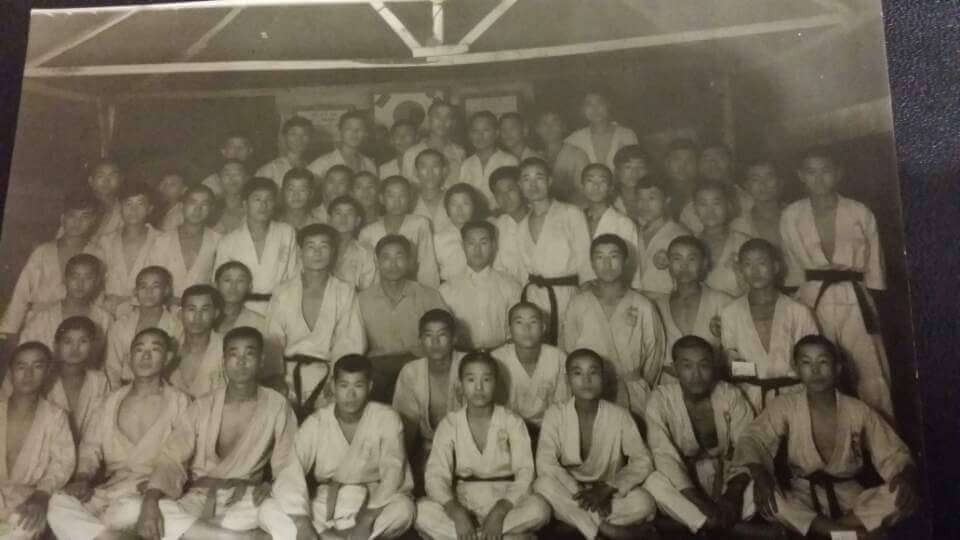
GM Lee (left) like instructor at the 26th Division Odogwan Taekwondo Training Center.
President ITF General Choi Hong-hi and his staff and instructors, the picture taken on March 22, 1966 (marked GM Lee Yoo-sun)
Lee owned a successful dojang in Seoul, and General Choi's
exile (January 1972) led to the Korea Taekwondo Association forcing gyms to
come under its authority. In 1975, Lee moved to the US, settling in Chicago and
reconnecting with the ITF. There, with the rank of 7th Dan ITF, he strengthened
his ties with his colleagues, the most renowned masters living in the northern
US and Canada. The area of Chicago where he opened his school was quite
troubled, and there was a local criminal who pressured him to pay for
“protection.” He resisted for quite some time, but the situation became really
difficult, until Lee was forced to strike that person. As a result of that
episode, he decided that for his own safety and that of his family, he had to
move to another city. So he went to Midland, Texas. There he built his
reputation as a master, with a main gym that was later followed by six other
branches with hundreds of students.
In 1980, Lee had a very difficult moment in his martial arts
career. General Choi was recruiting teachers to travel to Pyongyang and
introduce Taekwon-Do to North Korea. He asked Lee to accompany him. The
situation with South Korea was difficult, as there was a law prohibiting any
contact with North Korea. After consulting with other teachers and friends
about what to do (in particular his close friend Park Jong Soo), Lee put the
well-being of his family first and declined the General's request, refusing to
travel to the communist country, something terrible for any South Korean. With
pain, he noticed the disappointment of General Choi, for whom he had great
admiration. Although he always followed the ITF's guidelines, many of his
students did not understand GM Lee's decision and decided to switch to the
United States Taekwon-Do Federation (Master Charles Sereff). These were the
advantages enjoyed by teachers who were not born in Korea. In 1982, GM Nam Tae
Hi awarded him the rank of 8th Dan.
In 1990, he moved to Houston, Texas. In 1992, General Choi
called him to meet with him in the context of a seminar hosted by Van Binh
Ngyuen, which was also attended by Park Bu Kuang and Park Jung Hi. On May 20,
1992, Lee went to the hotel indicated by General Choi, where they met again
after more than ten years without seeing each other. Choi asked his disciple if
he really believed that the General was a communist, to which he replied that
he did not, that he considered him a patriot and his teacher. The general then
took out of his briefcase a calligraphy he had prepared especially for Lee,
handing it to him and telling him that he was awarding him the rank of 9th Dan.
They talked until 6 a.m., and the general told him to fill out the form and
submit it to the ITF offices. Lee never did so, as the connection with North
Korea and the serious problems it posed for him as a Korean living in the
United States continued to exist. In 1995, Uhm Woon Kyu (director of Chung Do
Kwan, where Lee had started) awarded him the 9th Dan, and he was immediately
examined at Kukkiwon. It was a special exam, not without some tension, because
he only performed ITF forms and was criticized for the level of contact he
applied during the combat. Under these conditions, he was awarded the 9th Dan
by Kukkiwon.
With the benefit of hindsight, Lee believes that General
Choi had always been a visionary, someone who looked at things from a long-term
perspective and understood that the spread of Taekwon-Do throughout the world
had to transcend the circumstances of any given moment. That is why Lee, as a
member of the Council of Masters in Seoul, is firmly committed to serving as a
bridge for the unity of Taekwon-Do, seeking to achieve the recognition that
General Choi Hong Hi deserves, thanks to which he also achieved a deep
friendship with masters Park Jong Soo, Choi Chan Keun, and Kim Jong Chan.
In recent years, GM Lee has been living half the year in
Texas and half in Korea. Lee has been working on the construction of a large
museum in the US, where he is gathering objects that belonged to General Choi,
so that it may serve as a memorial to the man he considers his teacher and
leader of Taekwon-Do.